
- Agronomics
-
Diseases
- Asian Rust
- Anthracnose
- Bacterial Blight
- Bacterial Pustule
- Bean Pod Mottle Virus
- Brown Stem Rot
- Cercospora Leaf Blight
- Charcoal Rot
- Downy Mildew
- Frogeye Leaf Spot
- Green Stem Syndrome
- Iron Deficiency Chlorosis
- Phytophthora Root & Stem Rot
- Powdery Mildew
- Rhizoctonia
- Seedling Diseases
- Septoria (Brown Spot)
- SCN (Soybean Cyst Nematode)
- Soybean Mosaic Virus
- Stem Canker
- Sudden Death Syndrome
- Viruses
- White Mold
- Pests
- Biological Control
- Diagnostic Tools
- About Us
- Library
Search the site
| Pest: Aphids |
| Aphid natural enemies |
| Links to state resources |

Your soybean checkoff.
Delivering Results.
Soybean aphid management for 2011
-
Scout once or twice a week beginning in late June or early July, no later than R1 beginning bloom soybean growth stage.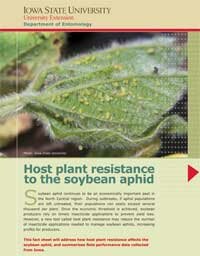
Using resistant varieties, farmers may expect to see some aphids land and colonize, but the population will either not grow or will grow at a reduced rate, so spraying may be eliminated.....read more (pdf)»
Researchers are hopeful that the combination of host plant resistance and beneficial insects will keep aphid populations below treatment levels within the decade.
Continue through pod fill. Check 20 to 30 plants per field, covering 80% of the field. Pay particular attention to late-planted fields, or fields under moisture stress. Examine the entire plant, particularly the new growth at the top and side branches.
-
Use an action threshold of 250 aphids per plant if populations are actively increasing.
This economic threshold, also called the "action threshold" at which treatment is initiated, should be based on an average of 250 aphids per plant over 20-30 plants sampled throughout the field. Regular field visits are required to determine if soybean aphid populations are increasing.
In replicated university research trials over several years and multiple midwestern states, this threshold has worked well in R1(beginning bloom) through R5 (beginning seed) soybeans. This threshold incorporates an approximate 7-day lead time between scouting and treatment to make spray arrangements or handle weather delays. Spraying at or beyond R6 has not been documented to increase yield. Look at Soybean Development Stages and Soybean Aphid Thresholds (a pdf file) for good photo close-ups of growth stages at R1- R8 and soybean action thresholds.
- To determine if an aphid population is actively increasing, check over several visits. Conditions that favor aphid population growth are cool temperatures, plant stress, particularly drought stress, and a lack of aphid predators.
-
Check for mummies (parasitized aphids) and for winged females. Do not spray if mummies are numerous, or if a majority of the aphids are winged or developing wings, an indication that the aphids will soon leave the field. Note presence of brown, dry parasitized aphids (aphid mummies), indicating that biological control is actively occurring.
Photo credit: Roy Scott
Read more about aphid natural enemies and biological control» - Plants are likely to be considerably above threshold if stems or pods are covered with aphids and honeydew, sooty mold covers the bottom leaves, and plants are stunted. Insecticide treatment is probably still of value, but the optimal time for treatment (greatest economic return) is past.
-
Consider the product choices for your situation.
Aphid kill, residual, and yield gains can vary among individual insecticides and application conditions.- Pyrethroids (Warrior, Mustang Max, Asana, Baythroid) have a long residual, and work best at temperatures below 90°F. Organophosphate products (Lorsban) have a fuming action, and may work well in heavy canopies or at high temperatures.
- Tank mixes of insecticide, fungicide and/or herbicide are not generally recommended. Soybean aphid, disease and weed pests do not all appear at the same time at economically damaging levels so a single tank mix, while convenient, will not provide satisfactory control of all three pest types. Additionally, sprayer specifications such as water volume, nozzle type (droplet size), and pressure must be optimized for each pest situation.
- Good coverage is important. High spray volumes and high pressure help to move the insecticide down into the canopy.
- Adding insecticide to early-season glyphosate application as "insurance" is not recommended unless aphids are at threshold levels and actively increasing.
Read more about insecticides for soybean aphids»
-
Leave an unsprayed check strip
An unsprayed check strip will allow you to compare against sprayed areas to determine the performance of the insecticide and the value of the treatment.
-
Communicate treatment plans to beekeepers.
Spraying at early reproductive stages poses a threat to bees. In areas with concern about honey bees, read insecticide labels carefully to determine risk to bees and take necessary precautions (for example, do not apply during hours in which bees are actively foraging).