
-
Soybean Diseases
- Asian Rust
- Anthracnose
- Bacterial Blight
- Bacterial Pustule
- Bean Pod Mottle Virus
- Brown Stem Rot
- Cercospora Leaf Blight
- Charcoal Rot
- Downy Mildew
- Frogeye Leaf Spot
- Green Stem Syndrome
- Iron Deficiency Chlorosis
- Phytophthora Root & Stem Rot
- Powdery Mildew
- Rhizoctonia
- Seedling Diseases
- Septoria (Brown Spot)
- SCN (Soybean Cyst Nematode)
- Soybean Mosaic Virus
- Stem Canker
- Sudden Death Syndrome
- Viruses
- White Mold
- Soybean Pests
- Diagnostic Help
- Field Trials
- Soybean Library
| Disease: White Mold |

Your Soybean Checkoff.
Delivering Results.
Illinois
Indiana
Iowa
Kansas
Michigan
Minnesota
Missouri
Nebraska
North Dakota
Ohio
South Dakota
Wisconsin
White Mold (Sclerotinia Stem Rot)
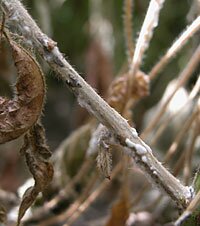 |
| White mycelium covering a soybean stem is a diagnostic sign of white mold. Click on image to view a larger version. Photo credit: Craig Grau |
White mold, caused by the soil fungus, Sclerotinia sclerotiorum, is a significant disease problem of soybean in the North Central region. The incidence and severity of white mold varies from year to year because of it's sensitivity to weather conditions.
White mold can substantially reduce yield, especially when climatic conditions and management practices favor high yield potential. Severe white mold infection weakens the plant and can result in wilting, lodging and plant death.
White mold is easily distinguished from most other soybean diseases by the presence of white cottony mycelia (moldy growth) and sclerotia on infected plant tissues.
Developing a management plan based on knowledge of field history and best disease management practices can help reduce losses from white mold.
|
Read the new 7- page, full-color NCSRP publication Management of White Mold in Soybean Or listen to the podcast series |
White mold has progressed from a sporadic disease to an annual threat to soybean production
White mold was discovered in central Illinois in 1948. Although it eventually became a chronic problem in Michigan, Minnesota, and Wisconsin, outbreaks were localized, and occurred where soybeans were grown in rotation with other susceptible crops.
Beginning in 1990, however, the occurrence of white mold became more widespread in the Great Lake states, and by 1992 was prevalent throughout all the North Central states.
Reasons for the sudden increase of white mold are not fully understood, but are thought to be related to changes in cultural practices that promote a greater canopy density. The increase in white mold can also be due to changes in the genetic base of current soybean varieties, or changes in the white mold pathogen.