
-
Soybean Diseases
- Asian Rust
- Anthracnose
- Bacterial Blight
- Bacterial Pustule
- Bean Pod Mottle Virus
- Brown Stem Rot
- Cercospora Leaf Blight
- Charcoal Rot
- Downy Mildew
- Frogeye Leaf Spot
- Green Stem Syndrome
- Iron Deficiency Chlorosis
- Phytophthora Root & Stem Rot
- Powdery Mildew
- Rhizoctonia
- Seedling Diseases
- Septoria (Brown Spot)
- SCN (Soybean Cyst Nematode)
- Soybean Mosaic Virus
- Stem Canker
- Sudden Death Syndrome
- Viruses
- White Mold
- Pests
- BioControl
- Diagnostic Tools
- About PHI
- Soybean Library
| Pest: Grasshoppers |

Your Soybean Checkoff.
Delivering Results.
University of Illinois
Southern Illinois University
Iowa State University
Kansas State University
Michigan State University
University of Minnesota
University of Missouri
University of Nebraska
North Dakota State University
Ohio State University
Purdue University
South Dakota State University
University of Wisconsin
Scouting for grasshoppers
|
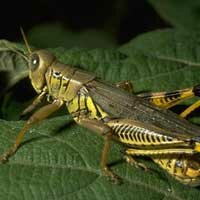
| Black chevron markings on the hind legs are a distinguishing feature of the differential grasshopper. Photo credit: B. Drees, Texas A&M University |
 |
| Nymph stage - differential grasshopper. Photo credit: University of Nebraska |
 |
|
Grasshopper nymphs feeding on a soybean leaf.
Photo credit: Marlin Rice, Iowa State University |
Adults of the differential grasshopper, Melanoplus differentalis, are are 1 1/8 to 1 3/4 inches long. The grasshopper's upper surface is dark brown to olive green, the under surface is yellow. It has clear, glossy hindwings. The chevron-like black stripes on the large portion (femur) of the hind legs are very distinct.
Scout for grasshoppers from July to September. Weather is the main factor affecting grasshopper populations. Watch for outbreaks in a year following several years of hot, dry summers and warm autumns. Warm autumns allow grasshoppers more time to feed and lay eggs. Dry weather increases nymph and adult survival.
Scout near grassy areas
Differential grasshoppers move in from weedy borders, so check border rows near weedy or grassy areas first. Alfalfa and clover fields are particularly favored; eggs are often deposited on field margins.
Injury symptoms
Leaf injury from grasshopper nymphs look similar to the small holes caused by Japanese beetle feeding, but are more jagged in shape. Older nymphs and adult grasshoppers will eat the entire leaf, leaving only the major leaf veins.
However, soybeans can tolerate a fair amount of defoliation. Typically, 20-25 percent defoliation of all the leaves of the plant would be necessary to justify an insecticide application in late season, pod-setting soybeans.
Resources
For a description of other major grasshopper species, see Grasshopper Identification Guide for Cropland Grasshoppers (pdf format) - University of Nebraska Extension publication EC1569
What's Eating your Soybean Leaves? - Marlin Rice, Integrated Crop Management, Iowa State University