Oomycete Diseases of Soybean and Current Management
by Jim Kurle, Department of Plant Pathology, University of Minnesota
December 2013
The complex of pathogens that causes seed, seedling, and root rots and damping off of seedlings is the most important cause of poor soybean plant stands and can significantly reduce soybean yields. The most important of these pathogens are the oomycetes, Phytophthora sojae and Pythium species.
Management of diseases caused by the oomycetes will be discussed with an emphasis on integration of resistance, chemical controls, and cultural practices. View presentation on the Plant Management Network.
 Study group focuses on new soybean virus
November 2013 by Matthew Wilde, Iowa Soybean Association Senior Writer
A relatively new and potentially destructive soybean disease has researchers on alert and searching for answers.
Soybean vein necrosis virus (SVNV) has been detected in 16 states and the province of Ontario, Canada, according to a recent report funded by the soybean checkoff. Little is known about the virus, but experts say it can reduce yields, especially when plants are stressed.
“Every field I walked into this year had it. Two years ago, it was in maybe 1 percent,” said Daren Mueller, an assistant professor in Iowa State University’s (ISU) Department of Plant Pathology and Microbiology. “Our message is soybean vein necrosis virus can potentially be a much more destructive virus than any other that we have studied.” Read the full article
 Soil sampling in the fall is a good time to analyze for soybean cyst nematodes
October 2013 by Phil Kaatz, Michigan State University Extension
Each year, the largest single cause of soybean yield loss is the soybean cyst nematode (SCN). This small, plant parasitic pest feeds on roots, removing plant nutrients and disrupting water and nutrient uptake. Plants that have high SCN numbers have poorly developed root systems that may result in yellow, stunted plants, or may result in no above-ground symptoms at all.
Producers that have soybeans in their rotation should consider splitting their soil samples taken during the fall to be analyzed for soil nutrients to also test for SCN. The Michigan Soybean Promotion Committee funds the cost of analyzing for SCN through the Soybean Checkoff. [Several states in the north-central region offer this program. Check with your state soybean checkoff board]. Read the full article from Michigan University Extension
 Soybean Aphids Moving To Buckthorn
September 12, 2013 by Janet J. Knodel, Extension Entomologist, North Dakota State University
Winged soybean aphids were observed moving to buckthorn, a small woody shrub. Buckthorn is common in our shelterbelts and woods in North Dakota (and throughout the North Central region). Soybean aphids overwinter as eggs on buckthorn. Read the full article in the North Dakota Crop and Pest Report.

Early symptoms of sudden death syndrome. Photo credit: Daren Mueller
Soybean Diseases Starting to Wake Up
August 26, 2013 by Daren Mueller, Department of Plant Pathology and Microbiology, Iowa State University
After taking muchof the growing season off, soybean diseases are finally starting to wake up and make a bit of noise. Read the full article in the Integrated Crop Management News
Assessing the Risk of White Mold (Sclerotinia Stem Rot) of Soybean in 2013
July 22, 2013 by Carl Bradley, University of Illinois
What does the risk of white mold look like for 2013? This is not an easy question to answer since we have had fairly favorable weather for white mold initially with some stretches of non-favorable weather in-between.
In fields that were not planted late and have been in full-canopy for the last couple of weeks, it is likely that apothecia have developed and that some infections may have occurred already. However, the progression of infection and disease development likely came to a stop with the hot and dry conditions observed last week. Read full article in the Bulletin
It’s Time to Begin Scouting for Soybean Aphid
July 11, 2013 by Eileen Cullen, University of Wisconsin Extension Entomologist
Begin field scouting when plants reach late vegetative to beginning bloom (R1) soybean growth stages, making one or two visits per field each week. Continue scouting until aphid populations decline, usually mid to late August. Economic threshold is reached when a field average is 250 aphids/plant and populations are actively increasing.
To calculate a field average, count the number of aphids on each of 20-30 plants per field, from a sample representative of at least 80% of the field. In this video, Dr. Cullen briefly demonstrates how this is done.
Soybean Aphid : Do Higher Crop Values Mean a Lower Threshold?
June 2013, by Kelley Tilmon, Soybean Extension Specialist, South Dakota State University
This slide presentation addresses the question of whether the economic threshold for treatment of soybean aphid should be lowered or not in light of current high crop values.
By the end of the presentation, viewers should know more about the distinction between an economic injury level and an economic threshold, how the original soybean aphid threshold recommendations were determined, how the information from those studies relates to current threshold recommendations, and why most extension entomologists do not recommend adopting significantly lower thresholds as a cost-effective management approach. View the slideshow on the Plant Management Network website
Common Issues with Soybean Germination and Emergence
May 15, 2013 by Shawn Conley, University of Wisconsin-Madison
In this video, common issues growers may have concerning soybean germination and emergence are discussed by Soybean and Wheat Extension Specialist Dr. Shawn Conley. In an early spring field, Shawn gives tips on seeding depth, soil compaction issues, loss of cotyledon at emergence, frost damage, and general stand assessment.
Management recommendations for large soybean seed
April 1, 2013 by Mike Staton, Michigan State University Extension
Due to the 2012 drought, the size of the soybean seed available for planting in 2013 will be highly variable. In some cases, the drought reduced the size of the seed, but more often it created larger seeds. Understanding the challenges of handling large seeds will improve seed performance in 2013. Read full article
 Identification and Management of Charcoal Rot of Soybeans
March 2013
This podcast presented by Doug Jardine, plant pathologist at Kansas State University, discusses charcoal rot of soybeans. Based on the most recent estimates, charcoal rot is the sixth most serious disease of soybeans in the United States, but its rank increases in years of extensive drought such as 2012.
Emphasis in the presentation is on both recognition of symptoms and practical management practices. View podcast on the Plant Management Network
 Indiana farmer elected head of North Central Soybean Research Program
February 20, 2013
The North Central Soybean Research Program (NCSRP) is proud to announce Indiana farmer Trevor Glick as the president of the farmer-led organization. Glick, a seventh-generation soybean, corn, winter wheat and cattle farmer from Columbus, Indiana, previously served as vice president and replaces Ed Cagney of Scotts, Michigan.
As the first second-generation NCSRP board member, Glick says he’s excited to lead the organization and fulfill its mission. His father, Myron, was also on the board. “I’m honored to serve soybean farmers. (My father) valued the board and the progress they were making and I feel the same way,” Glick says, “Coordinating research efforts among states and universities sets the organization apart.” Read more
Developing Soybean Cultivars
February 5, 2013 by William J. Kenworthy, University of Maryland
This podcast presented on the Plant Management Network website will help growers and consultants in all regions understand the principles of genetic inheritance and how they are used in breeding programs. A widely used classical breeding technique to develop new soybean cultivars will be diagrammed.
By the end of this presentation, the practitioner should have a better understanding of how soybean cultivars are developed and why some cultivar traits such as yield can vary across locations. View podcast

Variety test for resistance to charcoal rot. Photo credit: Alemu Mengistu, USDA
Charcoal Rot in Soybean: Managing Disease with Resistance
January 22, 2013
Charcoal rot was a problem in the hot, dry 2012 growing season, especially for growers in Kansas and Missouri, where the root disease is well-known during hot, stressful growing conditions. Now even in the Upper Midwest, charcoal rot has been found affecting soybean with increased frequency in Illinois, Indiana, Iowa, Minnesota, North Dakota, and Wisconsin.
This has intensified efforts by a consortium of plant pathologists and breeders at southern and midwestern Universities and the USDA to identify host resistance to charcoal rot and to develop resistant soybean cultivars. In a series of coordinated checkoff-funded projects, the group has now identified several soybean lines with moderate resistance to charcoal rot, some of which have been incorporated into breeding programs. Seven promising lines, including one MG II line, were identified by screening hundreds of plant introductions from the USDA soybean germplasm collection. Seed of these lines is being increased for inclusion in multi-state field screening tests.
The first multi-state field screening program for charcoal rot is now in place, with sites in Illinois, Kansas, Missouri, Tennessee, and Arkansas. The goal of the screening program is to identify cultivars with resistance to charcoal rot, proven under standardized screening methods, across a range of environments and years. As of 2012, 17 lines from MG III to V have been identified with moderate resistance and four lines with very good resistance. Read more about charcoal rot
 New Options for Soybean Aphid Host Plant Resistance
December, 2012 by Michael McCarville, Erin Hodgson and Matt O’Neal, Department of Entomology, Iowa State University
The Department of Entomology at Iowa State University recently updated our Soybean aphid-resistant varieties for Iowa for the 2013 growing season. The publication lists currently available soybean seed with resistance to soybean aphid. The list is intended to assist farmers looking to adopt this new management tactic and possibly reduce their need for a foliar insecticide. The listing includes varieties in late maturity group 0 and maturity groups 1, 2 and 3. >Read newsletter article
>View list
 Hundreds of SCN-resistant Soybean Varieties Available for 2013
November 17, 2012 by Greg Tylka, Iowa State University
Each year, Iowa State University, together with the Iowa Soybean Association, compiles a list of SCN-resistant soybean varieties that are available for the upcoming growing season. This year there are slightly fewer varieties available, almost all with PI 88788 SCN resistance.
>View list
 The Illinois Soybean Production Guide: Systematic Strategies to Increasing Yields now available online
October 31, 2012
The Illinois Soybean Association and Illinois State University, together with the United Soybean Board, has released a new soybean checkoff-funded booklet called Illinois Soybean Production Guide: Systematic Strategies to Increasing Yields.
The booklet provides key production recommendations related to seed selection, planting, pest and disease control, harvest and storage, and is available online >View the Illinois Soybean Production Guide
Probability of a Return on Investment for Soybean Seed Treatments
October 2, 2012 by Shawn P. Conley, State Soybean Extension Specialist, University of Wisconsin, Madison
This webcast provided by the Plant Management Network outlines the dramatic increase in soybean seed treatment use in the U.S., the various factors that go into seed treatment decisions, and provides a useful risk matrix that helps the user assess their probability of breaking-even on seed treatments >View webcast
 Seed Treatments for Soybean Nematodes
October 2, 2012 by Loren J. Giesler, Extension Plant Pathologist, University of Nebraska-Lincoln
This webcast reviews three currently-marketed seed treatment products for soybean nematode management, their active ingredients and modes of action. Dr. Giesler also summarizes the first year of a NCSRP-funded project on soybean cyst nematode treatments with 30 field trial locations in 2011 >View webcast
 Pay close attention to reducing soybean harvest losses this fall
September 10, 2012 by Mike Staton, Michigan State University Extension
Reducing harvest losses is a simple and effective way to increase soybean yields and profitability. Losses of 7.5 percent are common, but could be much higher this fall. With careful maintenance and operation, harvest losses can be maintained at 3 percent. Reducing harvest losses from 7.5 to 3 percent in a 45-bushel per acre soybean crop would increase the marketable yield by two bushels per acre >read the full article
 Identifying the Cause of Yellow Patches in Soybeans
September 5, 2012 by Daren Mueller, Department of Plant Pathology, Iowa State University
Over the past week, we have observed yellow patches developing in soybean fields across Iowa. There are several different causes, including spider mites and soybean cyst nematode. However, we will look at three additional problems that are causing these patches: sudden death syndrome, charcoal rot and top dieback >read the full article
Watch Fields for Soybean Sudden Death Syndrome and Soybean Cyst Nematodes
August 21, 2012 by by Bruce MacKellar, Michigan State University Extension
The next two weeks are the “sweet spot” of soybean scouting for sudden death syndrome and soybean cyst nematodes … read full article
 Late Season Diseases Are Early This Year
August 13, 2012 by Anne Dorrance, Ohio State University
Based on visits to some fields and samples sent in to the lab here in Wooster, there are some late season diseases appearing…including Phytophthora root and stem rot, Diaporthe stem canker, Sudden Death Syndrome, Soybean Cyst Nematode (SCN), Charcoal rot, and Frogeye leaf spot. At this stage the infections have taken place and fungicides will not prevent any further disease development. Scouting fields to see where these problems are will greatly help identify what disease resistance package the variety should have in the field the next time … read full article
Possible Breakdown of SCN Resistance Topic of New Webcast
July 29, 2012 by Greg Tylka, Department of Plant Pathology and Microbiology
Because of widespread, repeated use of varieties with the same PI 88788 source of resistance, many SCN populations have developed increased reproduction on that type of resistance. It is no longer uncommon to see SCN females on roots of SCN-resistant soybean varieties in the Midwest … read full article
Read more on SCN: Symptoms of SCN Damage Apparent Early, Yield Loss Likely Great in 2012

Do Dry-Weather Crops Still Need Fungicides?
July 20, 2012 by Carl A. Bradley, University of Illinois
Foliar fungal disease pressure will be low in water-stressed fields, so the likelihood that fungicide application will be profitable is low…read full article
Alternatives for Drought-damaged Soybeans – Bean Crop or Forage
July 16, 2012 by Stephen Barnhart and Andy Lenssen, Department of Agronomy, Iowa State University
How to evaluate the soybean crop in individual fields and plan when and how to harvest them to the greatest economic advantage.. .read full article
Soybeans, Insecticide/Miticide Applications, and Bees
July 10, 2012 by Ron Hammond and Andy Michel, Ohio State University
With the potential to have to spray insecticide/miticides on soybeans in the coming weeks during the flowering stages (R1-R2), we would remind growers of the concern with foraging bees. With drought conditions, the likelihood of bees coming to soybeans to forage is higher than usual…read full article
Early Season Water Deficit Stress on Southern WI Soybeans
July 2, 2012 by by Shawn Conley, Extension Agronomist, University of Wisconsin
In soybean there are two growth periods for which soil moisture is critical for optimum growth and development: at planting and during the reproductive stages from bloom through pod fill. In Wisconsin the main reproductive growth in soybean occurs from early July to mid-September. If a drought does develop and severely affects podset and seed fill, and if livestock feed is needed, soybeans can be harvested as a forage for ensiling...read full article
Soybean Response to Drought
June 22, 2012 by Andy Lenssen, Department of Agronomy, Iowa State University
Winter, spring and early summer precipitation has been below long-term average, and soybeans in some areas…are experiencing periodic water stress due to inadequate available water content in upper soil depths…read full article
Now is the Time to Look for Soybean Cyst Nematode Females on Soybean Roots
June 7, 2012 by Greg Tylka, Department of Plant Pathology and Microbiology, Iowa State University
The first generation of adult soybean cyst nematode (SCN ) females are appearing now. So the next six to eight weeks (through July) are prime time to dig roots and check for SCN females in Iowa...read full article
 Soybean Growth and Development
June 7, 2012 by Hans Kandel, Extension Agronomist Broadleaf Crops, North Dakota State University
Soybean seed, after it has absorbed water (about 50% of the seed weight) and under favorable growing conditions will start to germinate. The primary root will first emerge from the seed. As the germination process continues, the stem (hypocotyl) will emerge and pull the cotyledons toward the soil surface…read full article
Bean Leaf Beetle Thresholds: Where Do They Come From?
May 25, 2012 by Mike Gray, University of Illinois Extension
In a recent article, I mentioned that densities of bean leaf beetles typically must reach 39 or more per foot of row in soybeans at V2+ stages for economic damage to occur. In essence, large numbers of beetles are generally required in the spring to warrant a rescue treatment…So where did this threshold guideline come from?…read full article
New Weed ID Resource
May 24, 2012
Michigan State University Extension
The Michigan State University IPM Program has An IPM Pocket Guide for Weed Identification in Field Crops on-line in pdf format. The guide is also available as a print pocket-sized guide designed for field use. Weeds can be located in listings by their common or scientific name as well as by identifying characteristics.
Bean Leaf Beetles are Moving to Soybean
May 17, 2012 byErin Hodgson, Department of Entomology, Iowa State University
Bean leaf beetle is easily disturbed and will drop from plants to seek shelter in soil cracks or under debris. Sampling early in the season requires you to be sneaky to estimate actual densities. In some cases, you may just see leaf defoliation and not the beetles...read full article
Slugs Causing Concern Earlier Than Normal
May 14, 2012 by Ron Hammond and Andy Michel, Department of Entomology, Ohio State University
Slugs hatched out earlier than normal and have reached a size that can cause noticeable feeding injury much sooner. For growers who have experienced slug issues in the past, it is critical that fields be scouted NOW. If plants have emerged and have leaves, look for the telltale signs of slug feeding. The growing point of soybeans is between the cotyledons as the plant emerges from the soil. Thus, the slug is easily able to reach and feed on both the cotyledons and the growing point, making it much easier for slugs to kill the soybean plant as it emerges from the soil. For crops not yet or just now emerging, or yet to be planted, care should be taken to determine if slugs are present and lying in wait...read full article
Conservation System Management Considerations
May 14, 2012 by Mahdi Al-Kaisi, Department of Agronomy, Iowa State University
Conservation tillage systems such as no-tillage have a positive impact on soil productivity…especially under extreme wet or dry conditions. Current research shows that the tillage system has little effect on N, P and K crop needs. However, the timing and method of application are vitally important to no-tillage success, especially in cold-wet soil conditions where mineralization of soil nutrients is much slower compared to conventional tillage ...read full article
Soybean Seedling Diseases – What to Look for in 2012
May 10, 2012 by Anne Dorrance, Department of Plant Pathology, Ohio State University
Soybean seed and seedlings are vulnerable to a number of soil borne pathogens in the early spring. The conditions for these diseases have been quite variable this year in Ohio, with some areas very dry and cool while other locations have been warm and wet…read full article
Entomological Musings This Spring
May 10, 2012 by Mike Gray, University of Illinois Extension
Bean leaf beetles. Just as producers transition from corn planting to soybeans, observations of bean leaf beetles are becoming more common, especially in central Illinois. Bean leaf beetles overwinter in protected areas (beneath plant debris), and survival this past winter was undoubtedly quite good. Favorite overwintering sites include wooded areas adjacent to stands of alfalfa. In the spring, dormancy of the adults is broken, and they often move initially into alfalfa. Soybean seedlings in early-planted fields are most at risk to intensive feeding by the overwintering population.
Rescue treatments for bean leaf beetles in seedling soybeans are typically not warranted given the densities required to cause economic losses: 16 beetles per foot of row for the early seedling stage and 39 for the V2 stage and beyond. In light of the mild winter, I encourage producers to scout fields carefully for bean leaf beetles this spring. Pay particular attention to soybean fields that are planted first in your area of the state…read full article
 On-Farm Iron Deficiency Chlorosis Management Strip Trials
May 3, 2012 by Daniel Kaiser, University of Minnesota Soil Fertility Specialist
Four field trials have been conducted since 2010. At two of the locations there was severe yield reduction from IDC. In severe areas, in-furrow application of an EDDHA-Fe fertilizer significantly increased yield by an average of 5 to 6 bushels across the entire trial, and by as much as 10 bu/ac or more in the severe areas. The oats cover has also shown some positive yield benefits in severe IDC field areas. When comparing varieties, there was a large yield benefit with the variety that was less tolerant to IDC, but the tolerant variety still overall produced a higher yield level when IDC was present ...read full article
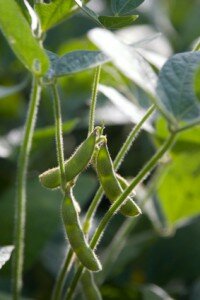
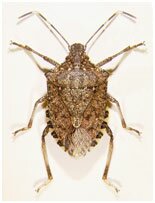
 A new publication is now available to help soybean producers manage SCN. The SCN Management Guide, fifth edition provides soybean producers with science-based information generated from many years of checkoff funded research that is proven to reduce SCN populations.